




Hotta Studio’s Neverness to Everness (NTE) drops players into a gorgeous, neon-soaked supernatural metropolis, but keeping your team packed with top-tier Espers requires a serious amount of Annuliths. Between the Scarborough Fair banners and the temptation of limited-time character matrixes, your wallet can take a beating faster than a sports car drifting through Hethereau.
While the standard in-game store is always there, smart players look for third-party options to make their gaming budget go further. However, not all top-up sites are built the same. This guide breaks down the most popular top-up platforms for NTE, looking past the flashy discount banners to see how they actually handle your money—and your account security.
Official Perfect World Payment Center
For players who prioritize peace of mind over saving a few bucks, the Official Perfect World NTE Store is the safest starting point.
- What's Good: It is 100% bulletproof. Because you are paying through the official client or the developer's authorized web portal, your currency arrives instantly and there is zero risk of getting your account flagged, banned, or slapped with a negative balance.
- What's Bad: You pay the absolute maximum retail price. There are no regional price cuts, no stacking coupons, and no promotional bonuses beyond the standard first-time buyer rewards.
LDShop
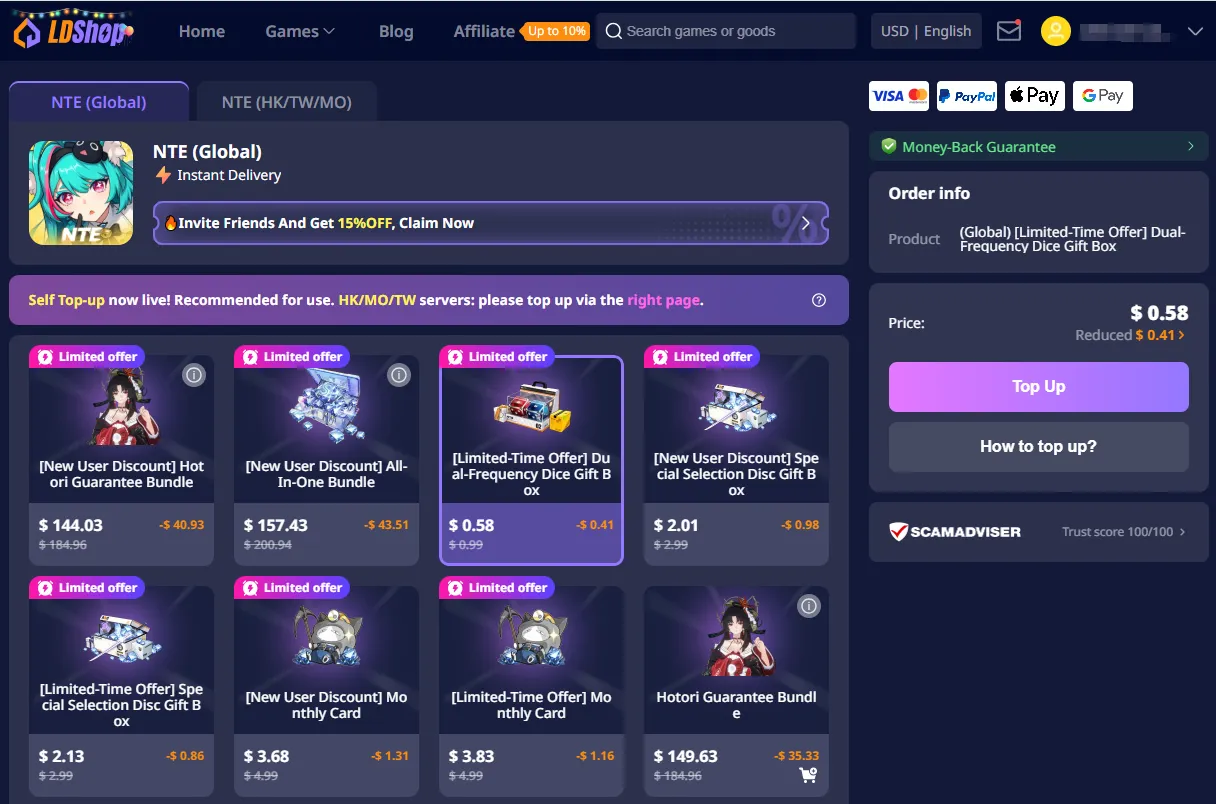
If you want to dodge the "official store tax" but refuse to gamble with your account security, LDShop offers the most clever workaround in the third-party market.
- What's Good: They offer legitimate savings (often shaving 15-20% off high-tier packs) without the sketchiest part of third-party top-ups: handing over your password. Instead of making you share your login credentials with a random customer service agent, LDShop runs a "Self Top-Up" browser protocol. You handle the actual account association yourself via UID/Server verification, keeping your personal data completely locked down.
- What's Bad: Their emphasis on security means the checkout process isn't just a "one-click" affair; you’ll have to manually verify your character details and navigate a slightly more rigid checkout queue to ensure the automated system hits the right account.
LootBar
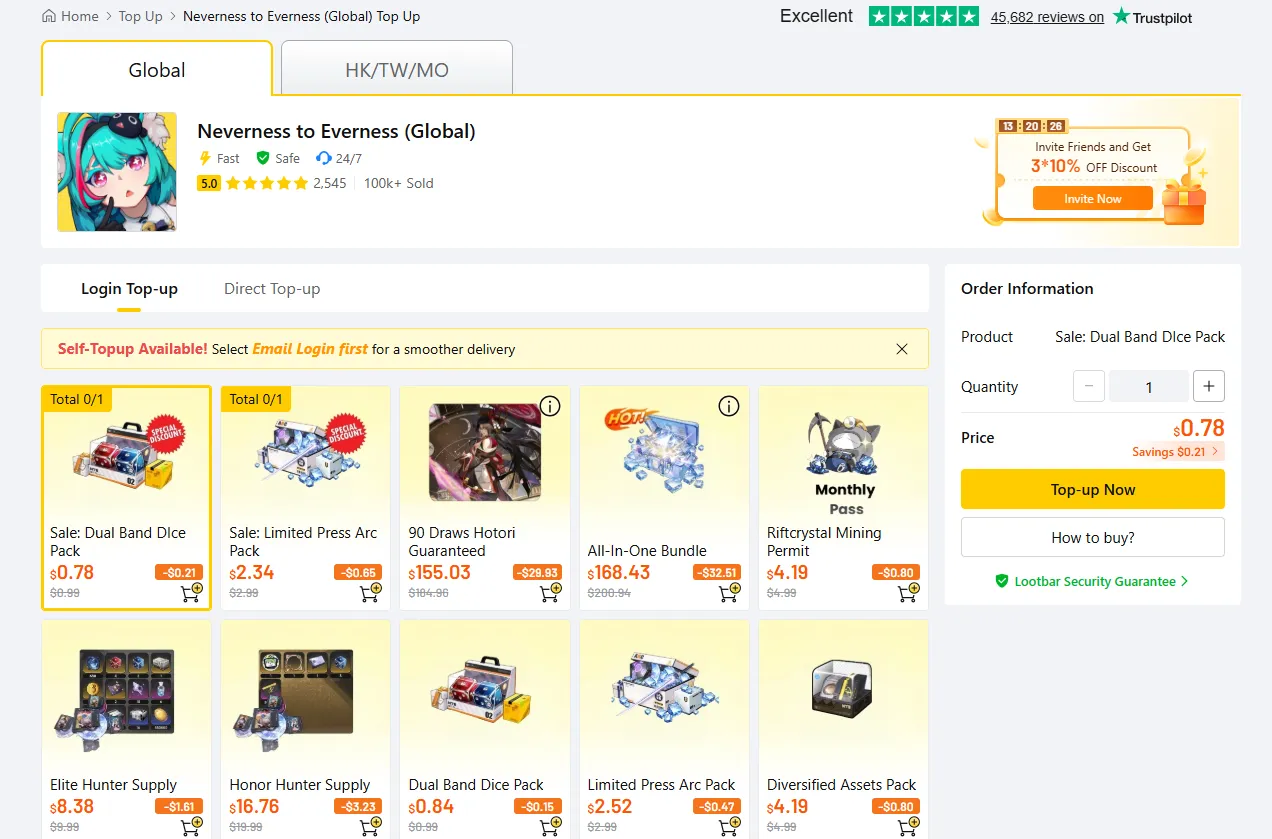
LootBar is an aggressive player in the gacha ecosystem, heavily favored by content creators and stream viewers for its flash sales.
- What's Good: It is built for speed and chasing short-term deals. During major NTE version updates or new character drops, LootBar frequently runs massive promotional events where you can stack discount codes from your favorite YouTubers to score cheap Riftcrystals or battle passes.
- What's Bad: Their long-term data privacy policies are incredibly vague. While the platform is functional, they don't provide explicit, clear documentation detailing how they secure your account backend during manual processing queues, which might make privacy-conscious players hesitate.
BuffBuff
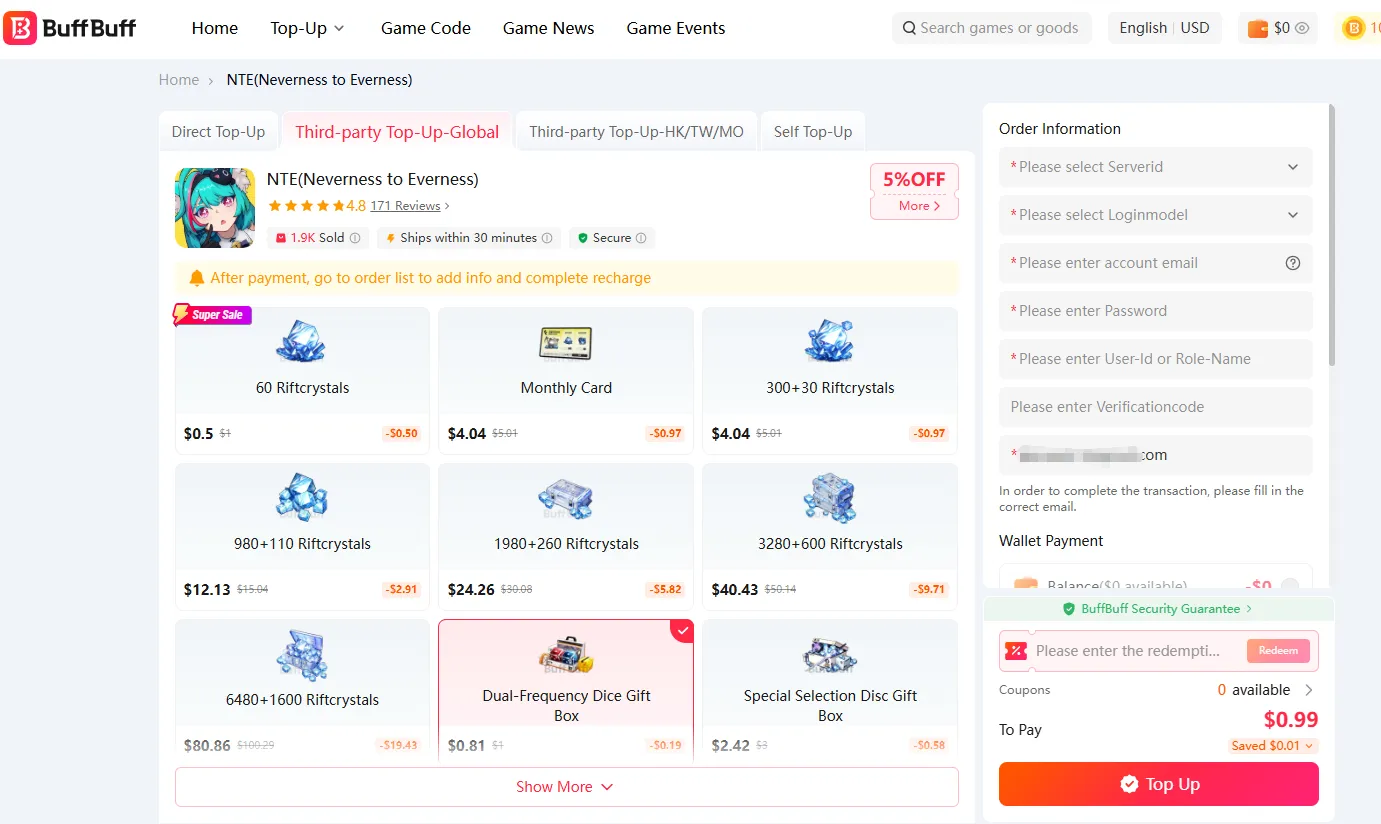
BuffBuff is a newer, highly automated digital storefront that has been making waves with aggressive marketing campaigns targeting anime-style open-world games.
- What's Good: Their introductory prices are wild—sometimes cutting the cost of mid-tier currency bundles by nearly half for first-time buyers. They also feature a native loyalty reward program called "Buff Points," which accumulates over time to give you free discounts on future pull sessions.
- What's Bad: Their inventory is notoriously unstable. Because they rely heavily on high-volume promotional stock, you might find that the specific high-end Annulith pack you need is temporarily "out of stock" right when a limited banner is about to expire.
SEAGM (SEA Gamer Mall)
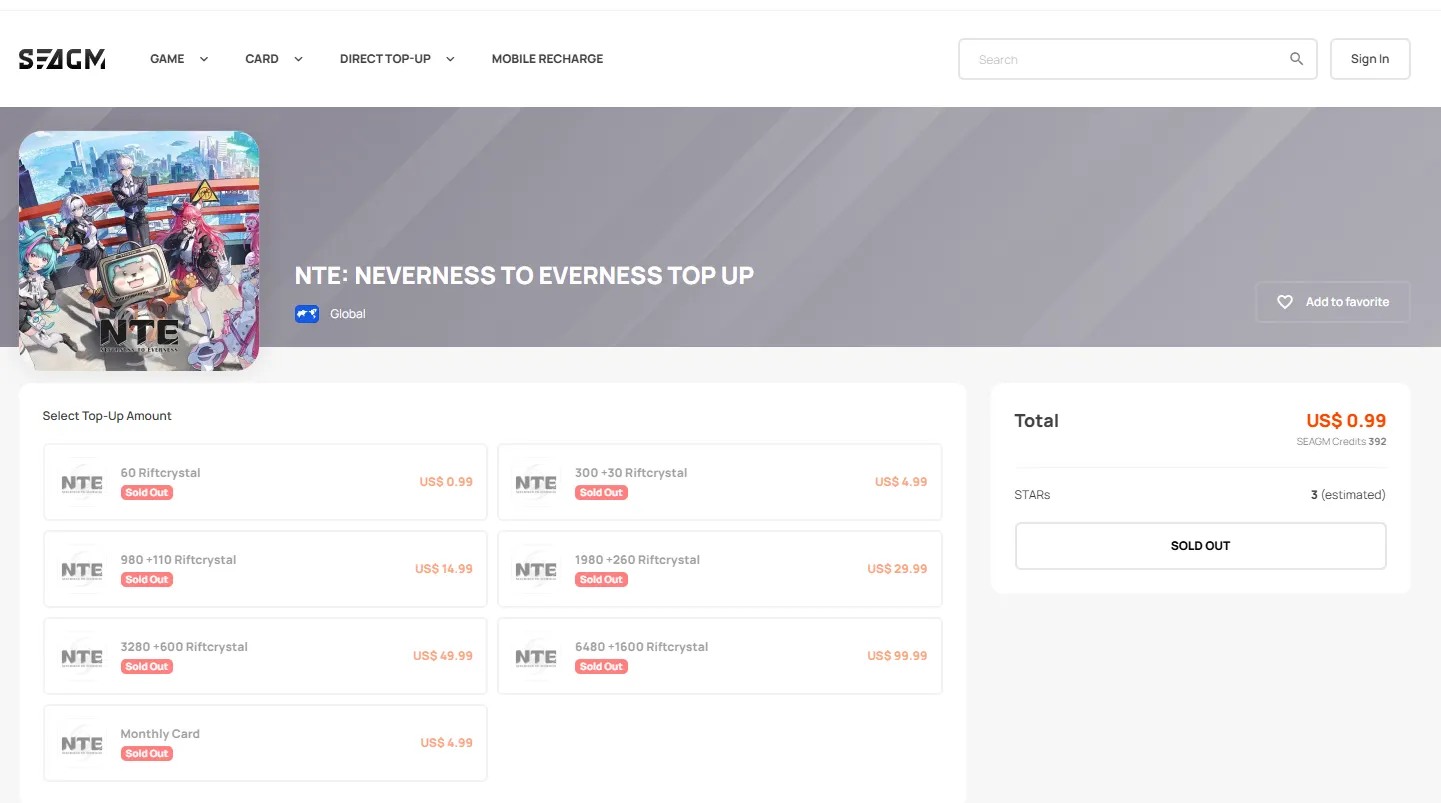
For international players dealing with regional payment headaches, SEAGM is the old-school veteran that bridges the gap.
- What's Good: Unmatched payment versatility. If you live in a region where the official game client rejects your local credit card, SEAGM accepts hundreds of hyper-local payment methods, including regional e-wallets, convenience store transfers, and local bank wires.
- What's Bad: The platform feels like a relic of the late 2010s. The user interface is cluttered, and if your transaction gets flagged for a manual security check, you might find yourself stuck talking to their slow support team while your banner timer ticks away.
The Verdict: Which Platform Wins?
The right choice comes down to what you are willing to risk. If you have infinite money and zero patience for external websites, stay inside the official NTE shop and pay full price.
But if you are trying to maximize your pull count on a budget, third-party is the logical pivot. LDShop wins the recommendation for the vast majority of players because it respects your privacy—letting you buy discounted packs through a secure, password-free browser system. Platforms like LootBar and BuffBuff are excellent for hunting down aggressive promotional events and flash sales, while SEAGM remains the ultimate fallback tool for international players who need local e-wallet support.






 TOP UP WITH DISCOUNT NOW
Aria Collins Experienced Game Editor
Aria Collins is a senior game editor at LDShop.gg, specializing in in-depth coverage of RPG and strategy games. With a strong focus on titles like Wuthering Waves, Honkai: Star Rail and Whiteout Survival, she combines industry insight with firsthand player experience to deliver clear, informative, and actionable content. Her work is dedicated to helping gamers make smarter decisions—whether it’s understanding new updates or optimizing their in-game strategy.
![[Limited-Time Offer] Dual-Frequency Dice Gift Box | NTE (Global)](https://shop.ldrescdn.com/rms/ld-space/process/img/c885511c579f492ba2d27f6a3ac461b41777450773.webp?x-oss-process=image/resize,m_fill,h_116,w_116/format,webp)